


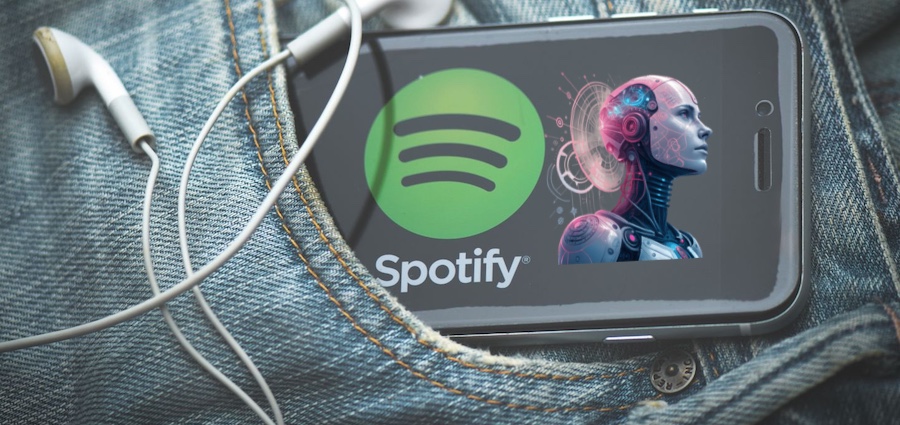
NEW YORK, NY. (THECOUNT) — Spotify announced new podcast verification measures Tuesday aimed at increasing listener trust and preventing unauthorized AI impersonation of podcast creators, while continuing to allow AI-generated music on its platform under certain restrictions.
The streaming company said it is expanding its verification program to include podcasts and reaffirming policies that prohibit creators from using artificial intelligence tools to impersonate another podcaster or host without permission.
Advertisement
According to Spotify, the company’s policies have long prohibited unauthorized impersonation, but the latest update specifically addresses the growing use of AI-generated voice cloning technology.
“Spotify will remove podcast shows and content that impersonate another creator or host’s likeness without permission, whether that’s using AI voice cloning or any other method,” the company said in a blog post released Tuesday.
Spotify stated the move is intended to help ensure podcast creators remain in control of their identities while allowing listeners to engage with content they know is authentic.
As part of the update, Spotify introduced “Verified by Spotify” badges for podcast shows.
The verification badges began appearing Tuesday, May 19, on select podcasts and are expected to roll out more broadly over the coming months.
The badge appears alongside a light green checkmark and is designed to identify an official creator, publisher, or brand presence on the platform.
Spotify said verified badges will appear on podcast show pages and within search results.
According to the company, podcasts must meet certain standards related to authenticity, listener engagement, and compliance with Spotify policies to qualify for verification.
Spotify said the company will evaluate factors including sustained audience activity, adherence to platform rules, and safeguards against fraudulent or bot-generated listenership.
The company described the changes as the beginning of a broader effort to support “a more trustworthy podcast ecosystem for creators, partners and listeners.”
Spotify also confirmed that AI-generated music remains permitted on the platform provided the content is original and legally uploaded.
The company said it does not intend to broadly police the tools artists use during the creative process.
However, Spotify emphasized that strict rules remain in place governing how AI-generated music is created and distributed.
Under Spotify policy, creators may not use AI tools to replicate the voice or likeness of a real artist without explicit authorization.
The company said music found to falsely impersonate real performers or uploaded deceptively under another artist’s identity may be removed from the platform.
Spotify also said it is implementing AI disclosure practices through metadata integrated into song credits.
According to the company, creators using generative AI tools are expected to provide disclosures indicating how AI was involved in a recording, including vocals, instrumentation, or post-production work.
Spotify further stated it continues to aggressively target “AI slop” and spam uploads designed to manipulate streaming royalties.
The company said its anti-spam systems target mass uploads, duplicate recordings, artificially short tracks, and bot-driven streaming activity.
Spotify reported removing more than 75 million spam-related tracks from the platform as part of those enforcement efforts.
The company additionally noted that creators remain responsible for ensuring AI-generated content does not violate existing copyright protections.
Spotify’s announcement comes as podcast consumption continues to grow on the platform.
According to company figures, approximately 7 million podcast titles were available on Spotify as of the end of the first quarter of 2026.
Google Maps: Spotify Headquarters, New York, New York
DEVELOPING::