


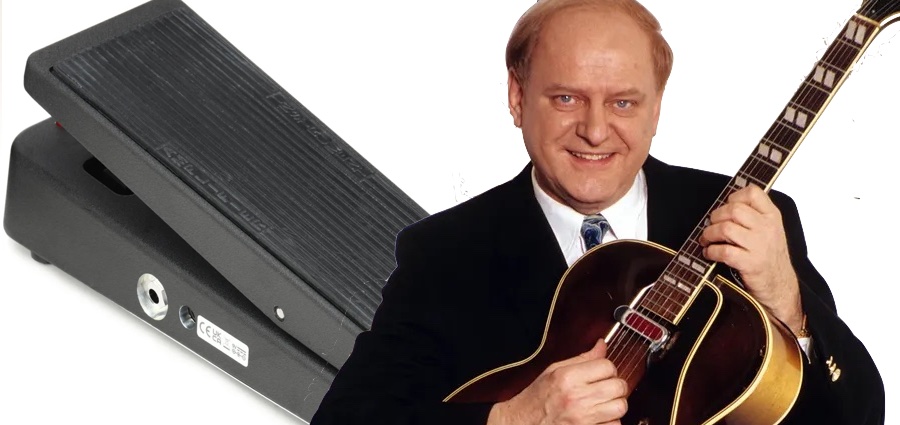
BEVERLY HILLS, CA. (THECOUNT) — Del Casher, the guitarist and inventor whose work helped bring the wah-wah pedal to electric guitar players and forever changed the instrument’s sound, has died. Casher, whose career also included film and television composing and work with some of music’s biggest names, was 88.
Casher died Oct. 1, according to a report published Sunday. He helped develop the wah-wah pedal in 1966 while working with Vox and the Thomas Organ Company, bringing a trumpet-inspired electronic effect into a foot-operated device that became a defining sound of rock, blues, funk and psychedelic music.
Advertisement
The wah-wah pedal works by allowing a guitarist to sweep a resonant midrange frequency filter up and down with a rocking foot motion. Moving the pedal forward emphasizes brighter frequencies, while rocking it back produces a deeper, more muted tone. The shifting sound resembles the human voice saying “wah,” giving guitarists a way to make notes seem to speak, cry, growl or wail.
The idea grew out of a transistorized midrange-boost circuit originally developed for Vox amplifiers. Casher noticed that adjusting the amplifier’s tone control produced a distinctive vocal-like effect. He pushed to have the circuit installed inside a volume-pedal housing so a guitarist could control the sound continuously with a foot while playing.
Engineers Brad Plunkett and Les Kushner worked on converting the circuit into the pedal, with Casher helping shape its sound and championing its use on electric guitar. The early concept was also considered for trumpet players, but Casher believed the device could give guitarists an entirely new expressive voice.
To demonstrate its potential, Casher recorded a collection of guitar performances showcasing different ways to use the effect. The demonstration helped persuade the company to market the pedal to guitarists. Vox introduced its wah-wah pedal in 1967, helping launch an effect that would become a staple of guitar rigs around the world.
The pedal’s appeal came from its versatility. Players could rock it in time with a rhythm to create a pulsing, percussive sound, sweep it through sustained notes for a vocal-like cry, or use it to give blues and lead-guitar passages a sharper, more expressive edge. It could also imitate the muted trumpet sound that helped inspire the original concept.
As the sound spread through rock music, the wah became closely associated with the electric-guitar experimentation of the late 1960s and 1970s. Guitarists including Jimi Hendrix and Eric Clapton helped make the effect instantly recognizable, while later generations carried it into funk, metal, pop and film soundtracks.
Casher’s career extended well beyond the invention. He appeared on screen playing guitar opposite Elvis Presley in the 1964 film “Roustabout” and Jerry Lewis in “The Patsy.” He also composed music for more than a dozen television shows and films.
He was also associated with Los Angeles’ celebrated studio-musician scene and the group of session players known as the Wrecking Crew, whose recordings helped shape hits for artists including Frank Sinatra, The Beach Boys and The Monkees.
Following Casher’s death, a fundraiser was launched to help his widow, Eiko Kacher, with financial challenges and the cost of moving into assisted living.
“Eiko is now facing overwhelming financial and personal challenges at a time when she should be surrounded by peace, care, and stability,” organizer Al Burg wrote in the fundraiser description. Donations are intended to help pay down credit card debt and provide safe housing and increasing care for Casher’s widow.
Contribute to the GoFundMe campaign supporting Eiko Kacher.
Casher’s work helped turn a curious electronic effect into one of the most influential tools in modern guitar playing. More than half a century after the wah-wah pedal entered production, its unmistakable sound remains a familiar part of popular music.
Casher was associated with Beverly Hills and the greater Los Angeles music scene in Southern California.
Google Maps: Beverly Hills, California (regional location)
DEVELOPING::