


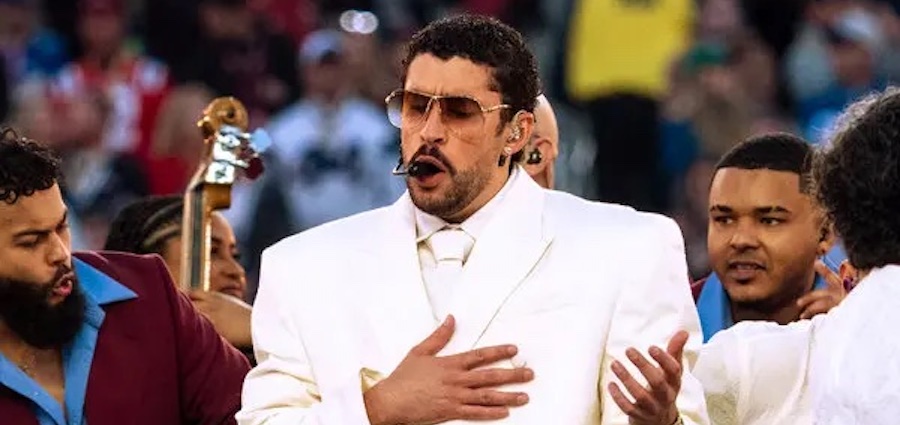
WASHINGTON, D.C. (THECOUNT) — New Nielsen ratings data reveals a notable decline in viewership for the Bad Bunny halftime show during Super Bowl LX at Levi’s Stadium in Santa Clara on Sunday. While the overall broadcast remained strong, the numbers fell short of last year’s records, raising questions among conservative media and viewers about audience engagement and entertainment choices.
According to Nielsen, the Super Bowl broadcast, which included NBC, Peacock, Telemundo, NBC Sports Digital, and NFL+, averaged 124.9 million viewers. This was slightly lower than the previous year’s record of 127.7 million viewers. During the halftime segment, Bad Bunny drew 128.2 million viewers, ranking fourth all-time behind Kendrick Lamar (133.5 million), Michael Jackson (133.4 million), and Usher (129.3 million).
Advertisement
Additional data from Samba TV, which tracks household viewing, indicated a sharper drop in live engagement. According to Samba TV, approximately 26.5 million U.S. households watched Bad Bunny’s halftime performance, a 39% decrease from the Kendrick Lamar halftime show in 2025. Total Super Bowl household viewership was 48.6 million, down about 13% year-over-year.
Commentators noted that while Nielsen measures overall viewers, Samba TV tracks households, which may account for some of the discrepancy. Still, the contrast in year-over-year engagement fueled narratives from conservative media suggesting mainstream entertainment choices — including language, cultural content, or political messaging — may influence viewer retention.
Peak viewership during the game reached 137.8 million in the second quarter, according to Nielsen, indicating that millions tuned in for the game but did not remain for the halftime show. Conservative groups, such as Turning Point USA, staged an alternative “All-American Halftime Show” featuring country music performers, which reportedly attracted millions of viewers on social media platforms.
Critics on social media highlighted segments of Bad Bunny’s set that included political messaging and explicit language, suggesting these factors may have contributed to the audience decline. Supporters of the performance maintain that the show still drew millions, making it one of the highest-viewed halftime events in history, even if it did not surpass last year’s record.
Despite the lower viewership numbers, NBC and the NFL maintained that the broadcast was a success. The network emphasized that Super Bowl LX remains one of the most-watched events in U.S. television history, with total audience engagement — including live and streaming platforms — exceeding expectations for major televised events.
Analysts say that while ratings provide insight into audience trends, they are not definitive measures of the show’s impact. “There are multiple ways to measure engagement today,” said one broadcast industry analyst. “Streaming, social media interaction, and delayed viewing all contribute to understanding how the audience consumes content beyond traditional Nielsen metrics.”
The debate over viewership trends comes amid broader discussions in conservative media regarding cultural representation and content choices at high-profile events. Some argue that the decline in live viewing reflects a shift in audience preferences toward programming they perceive as more traditional or patriotic.
Even with the year-over-year decline, Bad Bunny’s halftime show remained among the most-viewed in the last decade, underscoring the ongoing popularity of the Super Bowl as a national event.
DEVELOPING::