


LOS ANGELES, CA. (THECOUNT) — For over a decade, the sprawling, fortress-like compound tucked away on Wonderland Avenue in Laurel Canyon was synonymous with its eccentric owner, Academy Award-winning actor and musician Jared Leto. But following the property’s quiet sale, a familiar set of questions has resurfaced regarding the future of one of Los Angeles’ most covert architectural anomalies: What does it actually take to own, maintain, and protect a piece of history as heavily regulated as the Lookout Mountain Air Force Station?
A Top-Secret Past
Long before it was a celebrity crash pad featuring underground galleries, a massive screening room, and a lagoon-style pool, the two-acre site served as a vital, highly classified nerve center for the United States military.
Advertisement
Originally constructed in 1941 by the Army Corps of Engineers as an air defense center, the compound evolved during the Cold War into the Lookout Mountain Laboratory (officially designated as the Lookout Mountain Air Force Station). From 1947 to 1969, the heavily fortified site operated under strict secrecy for the Department of Defense and the Atomic Energy Commission. Its personnel produced classified motion pictures and still photographs documenting atomic bomb tests, storing millions of feet of sensitive 35mm film within subterranean, climate-controlled, fireproof vaults.
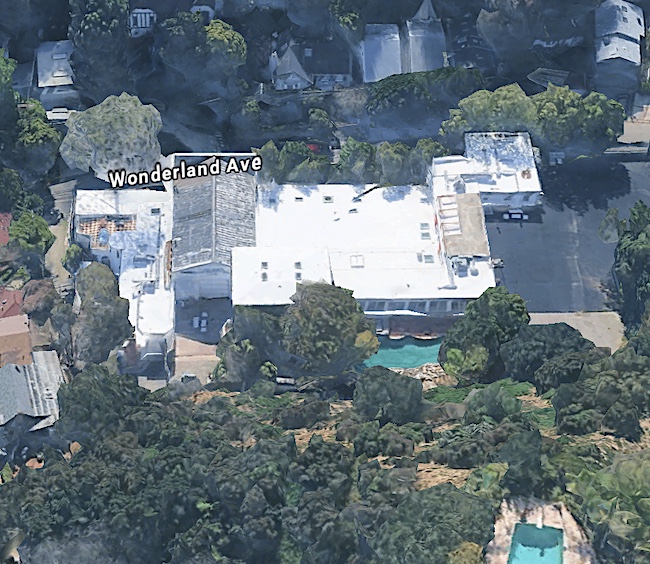
When the military finally decommissioned the base, it was sold off at auction. Over the decades, it transitioned through private hands—including a stint as a rehab facility and ownership by various artists and attorneys—before Leto scooped it up for $5 million in 2014 and later offloaded it in a deal valued around $12 million.
The Lookout Mountain property was purchased in 1994 for $750,000 by artist Mark Lipscomb and Los Angeles Superior Court judge John Ladner. They acquired the compound at a public auction held on January 18, 1994—conveniently the day right after the Northridge earthquake.
The Historic-Cultural Monument Hurdle
Owning a property officially recognized as Los Angeles Historic-Cultural Monument No. 1098 is a double-edged sword. While holding a piece of tangible Cold War history carries immense prestige, it also binds any owner to a maze of municipal red tape designed to prevent modern development from erasing the past.
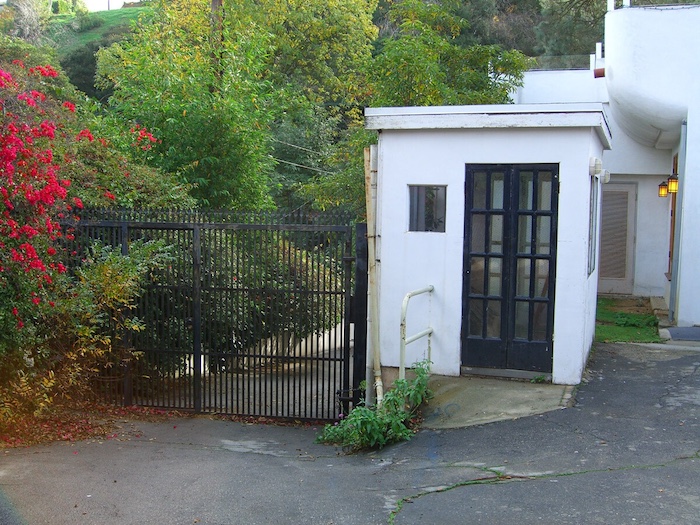
Under Los Angeles preservation laws, historic monuments cannot simply be remodeled or torn down on a whim. Any substantial structural alterations, interior overhauls that impact character-defining spaces, or exterior modifications trigger mandatory reviews by the city’s Cultural Heritage Commission and the Office of Historic Resources.
Furthermore, if a buyer ever harbored dreams of clearing the sprawling compound to build a modern mega-mansion, they would face monumental legal roadblocks:

- Demolition Delays: The city holds the legal authority to halt demolition permits for months—and potentially up to a year—to actively seek alternative preservation options or buyers.
- Environmental Oversight: Strict guidelines under the California Environmental Quality Act (CEQA) mandate rigorous studies to prove that saving or adapting a historic resource is completely impossible before any teardown can be greenlit.
- Adaptive Reuse Reality: Because of these tight guardrails, owners of Lookout Mountain are effectively restricted to adaptive reuse. Former military soundstages must become recording studios, bomb shelters become art galleries, and heavy industrial architecture must be lived around rather than replaced.
As the dust settles on the latest transaction, the identity of the buyer remains tightly shielded behind newly minted corporate trusts and LLCs. Whoever now holds the keys to Laurel Canyon’s ultimate secret base inherits not just a legendary Hollywood estate, but the heavy responsibility of preserving a subterranean monument that outranks any standard luxury real estate portfolio.