


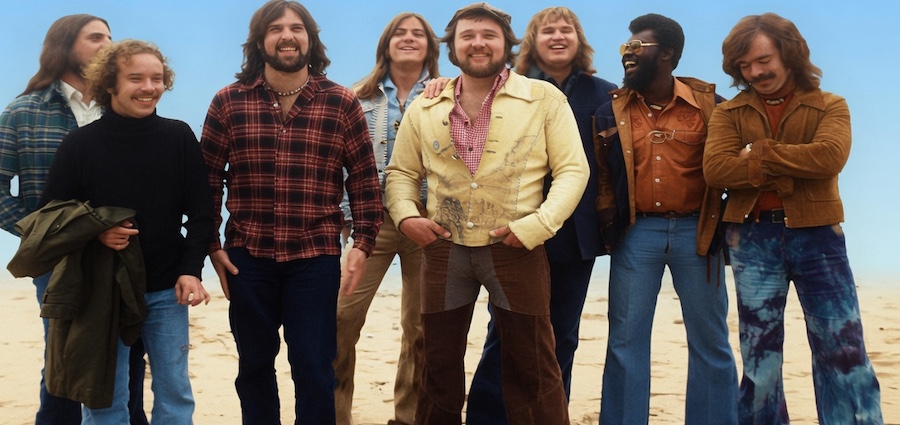
TORONTO, ONTARIO, CANADA. (THECOUNT) — David Clayton-Thomas, the legendary Canadian singer, songwriter, and longtime frontman of Blood, Sweat & Tears whose unmistakable voice powered classic hits including “Spinning Wheel,” “You’ve Made Me So Very Happy,” and “And When I Die,” died Wednesday at a Toronto hospital, according to his publicist. He was 84.
Clayton-Thomas was 84.
Advertisement
No cause of death was immediately released. His publicist said the acclaimed performer died peacefully Wednesday evening at a hospital in Toronto.
Widely regarded as one of the defining voices of late-1960s and early-1970s rock and soul, Clayton-Thomas helped transform Blood, Sweat & Tears into one of the era’s most successful bands, blending rock, jazz, blues, R&B, and horn-driven arrangements into a sound that dominated American radio.
His signature performance on “Spinning Wheel” became one of the band’s most enduring recordings, climbing to No. 2 on the Billboard Hot 100 in 1969. That same year, Blood, Sweat & Tears also reached No. 2 with “You’ve Made Me So Very Happy” and “And When I Die,” establishing the group as one of the biggest acts in popular music.
The band’s self-titled 1968 album topped the Billboard 200 for seven consecutive weeks and remained on the chart for nearly two years. The record earned widespread acclaim and captured the Grammy Award for Album of the Year in 1970. Clayton-Thomas also shared in the group’s Grammy success, with Blood, Sweat & Tears winning multiple honors during its peak years.
Born David Henry Thomsett on September 13, 1941, in Surrey, England, during World War II, Clayton-Thomas immigrated to Canada with his family after the war. Raised outside Toronto, he endured a difficult childhood marked by family struggles and repeated encounters with the juvenile justice system.
While serving time in a reformatory, Clayton-Thomas discovered music after obtaining a discarded guitar left behind by another inmate. Teaching himself to play, he eventually launched a career that would make him one of Canada’s most celebrated recording artists.
Following his release in the early 1960s, he became immersed in Toronto’s thriving music scene and was mentored by rockabilly pioneer Ronnie Hawkins. In 1966, Clayton-Thomas scored a major Canadian hit with his anti-war song “Brainwashed,” helping establish his reputation as both a songwriter and vocalist.
His career changed dramatically after folk singer Judy Collins recommended him to Blood, Sweat & Tears drummer Bobby Colomby. Following the departure of founding frontman Al Kooper, Clayton-Thomas joined the group and became the voice behind its greatest commercial successes.
Blood, Sweat & Tears went on to headline many of the era’s most iconic venues and events, including Madison Square Garden, the Hollywood Bowl, and the legendary Woodstock Music & Art Fair. The band also became the first major American rock group to tour behind the Iron Curtain in Communist Eastern Europe in 1970.
Although Clayton-Thomas left the band in 1972 amid the pressures of international fame, immigration issues, and relentless touring, he later returned for additional stints and continued performing both as a solo artist and with later versions of Blood, Sweat & Tears until 2004.
Beyond performing, he hosted a television series for CBC, released numerous solo albums, authored the memoir Blood, Sweat and Tears, and devoted significant time to charitable organizations supporting troubled youth, drawing from his own difficult upbringing.
Clayton-Thomas received numerous honors throughout his career, including induction into the Canadian Music Hall of Fame, a Special Juno Award recognizing his extraordinary contributions to Canadian music, a star on Canada’s Walk of Fame, and induction of “Spinning Wheel” into the Canadian Songwriters Hall of Fame.
In 2023, the band’s remarkable story reached a new generation through the documentary What the Hell Happened to Blood, Sweat & Tears?, which explored both the group’s groundbreaking success and the controversies surrounding its international tours.
He is survived by his daughters, Ashleigh Clayton-Thomas and Christine Graham.
According to his representative, a memorial concert celebrating Clayton-Thomas’ life and career will be announced at a later date, with proceeds benefiting Peacebuilders Canada.
DEVELOPING::